Breathing While Swimming: The Technique That Changes Everything
Most adult beginners struggle with breathing — here's why and how to fix it
Breathing is the skill that makes or breaks adult swimmers. You can have a decent kick and reasonable arm stroke, but if you can't breathe while swimming, you'll be exhausted after one length. Here's the full breakdown of how to do it correctly.
What You'll Need
- Ability to put your face in the water comfortably (complete the face submersion guide first)
- A kickboard or pool noodle for practice drills
- Goggles
- A lane or open space in the shallow end
Step-by-Step Guide
Understand the timing first
The most important concept: you exhale while your face is in the water, and inhale when your face is out. Most beginners try to do both while their face is up — but there isn't enough time. The exhale must happen underwater.
Tip: Practice this standing in the water before you try it while swimming. Face in, exhale through your nose (you'll see bubbles). Face up, inhale. Repeat 20 times until the timing feels natural.
Practice exhaling underwater
Submerge your face and exhale a long, slow, continuous stream of air through your nose. You should see a steady stream of bubbles. Hold for 3–4 seconds, then lift your face and inhale.
Tip: Try humming while your face is in the water. The humming forces air out through your nose and prevents water from coming in. It also gives you something to focus on besides the discomfort.
Learn the head rotation (not lifting)
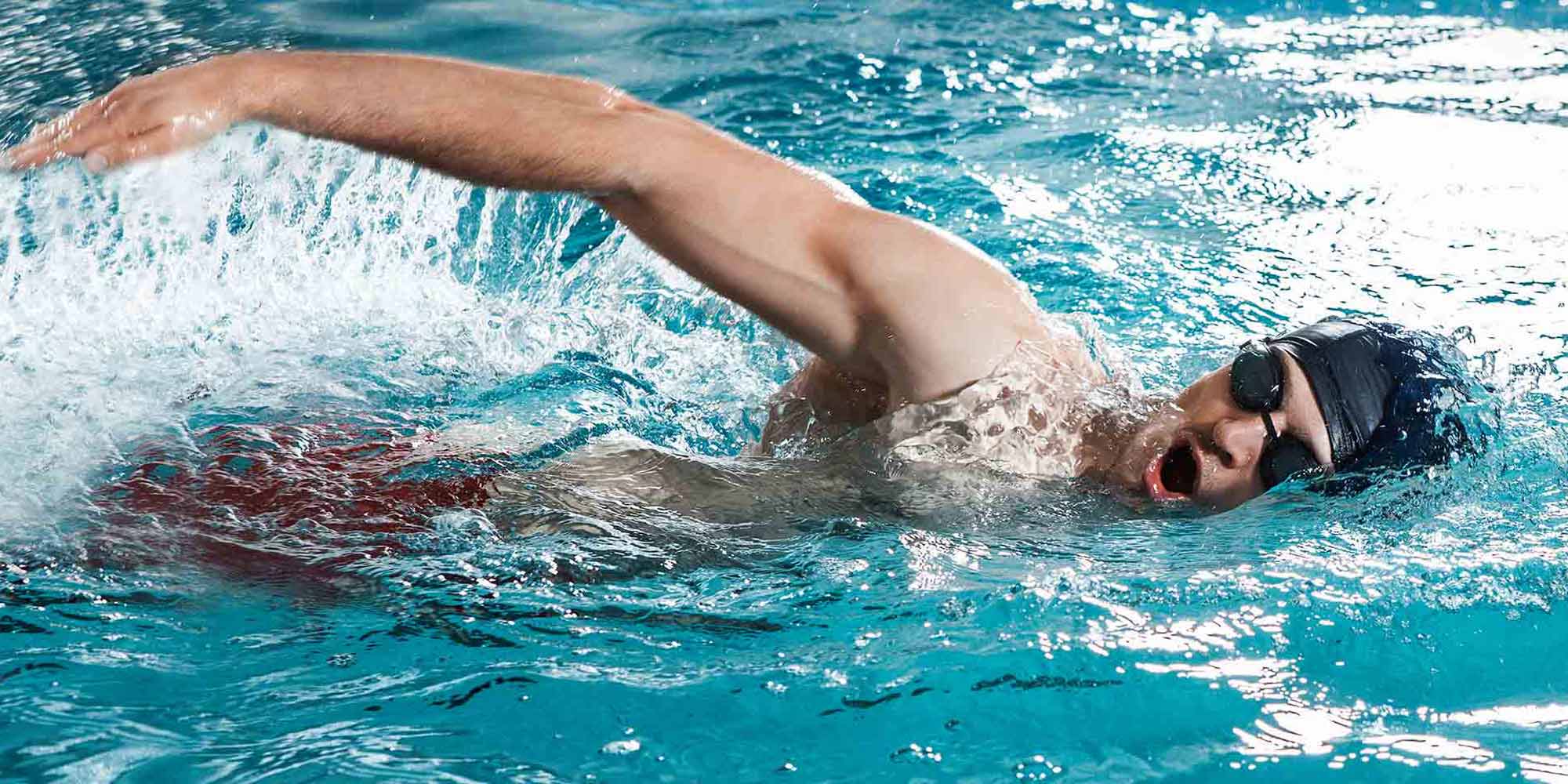
In freestyle, you don't lift your head to breathe — you rotate it to the side. Your head rotates with your body as your arm pulls through. One goggle stays in the water, one comes out. Your mouth clears the surface just enough to inhale.
Tip: Think of your head as attached to your spine — it rotates with your body, not independently. If you're lifting your head up, your hips will drop and you'll create drag.
Practice with a kickboard
Hold a kickboard with both hands extended in front of you. Kick across the pool. Every 3–4 kicks, rotate your head to the side and inhale, then rotate back down and exhale. This isolates the breathing pattern without the complexity of arm strokes.
Tip: Practice breathing to both sides. You may have a preferred side, but being able to breathe bilaterally (both sides) makes you a more versatile swimmer and reduces neck strain.
Add one arm stroke
Now add one arm pull. As your right arm pulls through the water, your body naturally rotates right — use that rotation to breathe. The arm pull creates the rotation; the rotation creates the breathing opportunity.
Tip: The breathing should feel like it's happening because of the stroke, not in spite of it. If you're fighting to get your head up, you're lifting instead of rotating.
Breathe every 3 strokes
Once you can breathe consistently, aim for every 3 strokes (which alternates your breathing side). This is the standard pattern for most recreational swimmers. It keeps your stroke balanced and ensures you're getting enough oxygen.
Tip: If every 3 feels too infrequent at first, breathe every 2 strokes on your preferred side. Build up to every 3 as your fitness and technique improve.
Common Mistakes (and How to Fix Them)
Lifting your head instead of rotating
Keep one goggle in the water when you breathe. If both goggles are out of the water, you're lifting. The mouth barely needs to clear the surface — just enough to inhale.
Holding your breath underwater
Exhale continuously while your face is down. If you hold your breath, you'll have to both exhale and inhale when your face is up — there isn't time for both.
Breathing too late
Start your rotation before your arm finishes its pull. If you wait until your arm is fully extended, you'll miss the window.
Panicking when you swallow water
Everyone swallows water while learning. It's not dangerous. Cough it out, rest at the wall, and continue. It gets much less frequent as your technique improves.
Your Practice Schedule
Spend the first 15 minutes of every pool session on breathing drills with a kickboard before you attempt any full freestyle swimming. Consistent drill work on this skill will accelerate your progress faster than any other single practice.
Next Guide
Overcoming Fear of Water