
Your First Swim Lesson: What to Expect
A complete walkthrough of your first session — so nothing surprises you
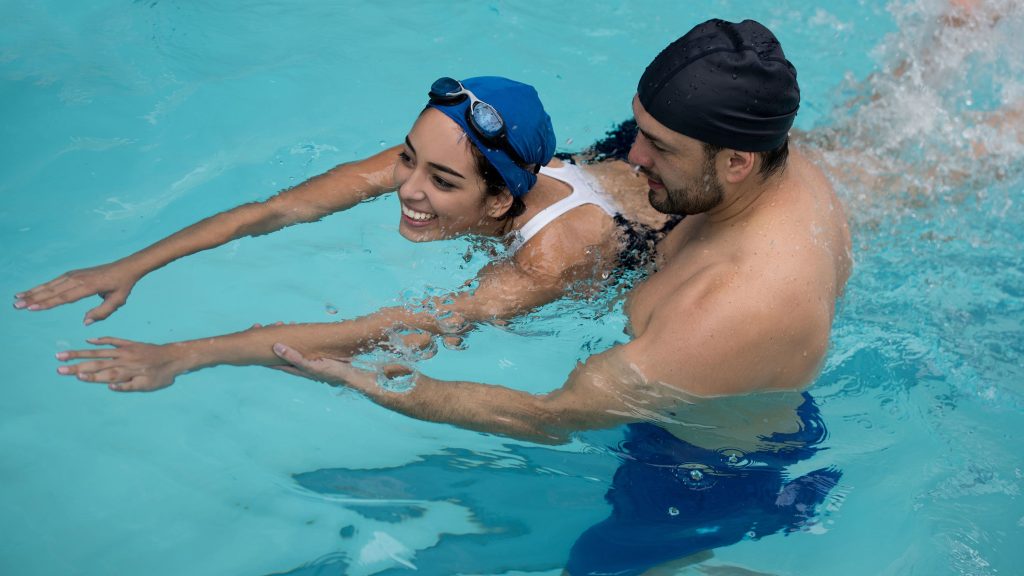
Your first swim lesson is going to feel unfamiliar — and that's completely normal. The goal of this guide is to remove every unknown so you can walk in focused on learning, not on figuring out logistics.
What You'll Need
- Swimsuit (one-piece or board shorts — avoid loose clothing that creates drag)
- Swim cap (optional but recommended to keep hair out of your face)
- Goggles (ask your instructor for recommendations if you don't have any)
- Towel and a change of clothes
- Water bottle — swimming is exercise and you will sweat
- An open mind and realistic expectations
Step-by-Step Guide
Arrive 10–15 minutes early
Use this time to find the pool, change, shower (most pools require a pre-swim shower), and get your bearings. Walking in rushed adds unnecessary stress to an already new experience.
Tip: Do a quick walk around the pool deck before getting in. Identify where the shallow end is, where the lane lines are, and where the steps or ladder are. Knowing your exits reduces anxiety.
Introduce yourself and share your concerns
Your instructor needs to know your starting point. Tell them: have you ever been in a pool before? Do you have any specific fears? Any physical limitations? The more they know, the better they can tailor the session.
Tip: Don't downplay your fear or experience level to seem less nervous. Instructors work with scared beginners every day — there's nothing you can say that will surprise us.
Enter the water slowly
You'll likely start in the shallow end, where you can stand. Use the steps or ladder — don't jump in. Take a moment to feel the water temperature and let your body adjust.
Tip: Splash some water on your face and arms before fully getting in. This helps your body acclimate and reduces the shock of submersion later.
Practice face submersion
Almost every first lesson starts here. You'll practice putting your face in the water and exhaling through your nose. This is the foundational skill everything else builds on.
Tip: If this feels scary, start by just getting your chin wet, then your mouth, then your whole face. There's no rush. Your instructor will guide you at your pace.
Try the back float
With your instructor's support, you'll practice lying on your back in the water. This is often the most emotionally significant moment of the first lesson — feeling the water hold you up changes how you perceive it.
Tip: The key is to lay your head all the way back — ears in the water, chin pointing up. Most people resist this, which causes their hips to drop and they 'sink.' Trust the water.
Basic kicking
Holding the wall or a kickboard, you'll practice kicking from your hips with straight legs. This is your first experience of moving through the water under your own power.
Tip: Your feet should be pointed, not flexed. Think 'floppy feet' — relaxed ankles, not stiff.
Debrief and take notes
At the end of the session, your instructor will review what you worked on and give you specific things to practice before the next lesson. Write these down immediately — you'll forget them otherwise.
Tip: Ask your instructor: 'What's the one thing I should focus on before next week?' Get a specific answer.
Common Mistakes (and How to Fix Them)
Holding your breath the whole time
Practice exhaling through your nose while your face is in the water. The exhale is what makes breathing while swimming possible.
Tensing up when you feel unstable
Tension makes you sink faster. When you feel wobbly, consciously relax your muscles — especially your shoulders and legs.
Trying to do too much in the first session
Your first lesson is about building comfort and trust with the water. Mastering face submersion and back float is a completely successful first session.
Your Practice Schedule
Before your next lesson, spend 15–20 minutes at the pool practicing face submersion and back float. Do 10 face submersions (5 seconds each) and 5 back float attempts. That's it. Quality over quantity.
Next Guide
How to Float on Your Back