
How to Tread Water: The Complete Guide
Your most important survival skill — and it's easier than you think
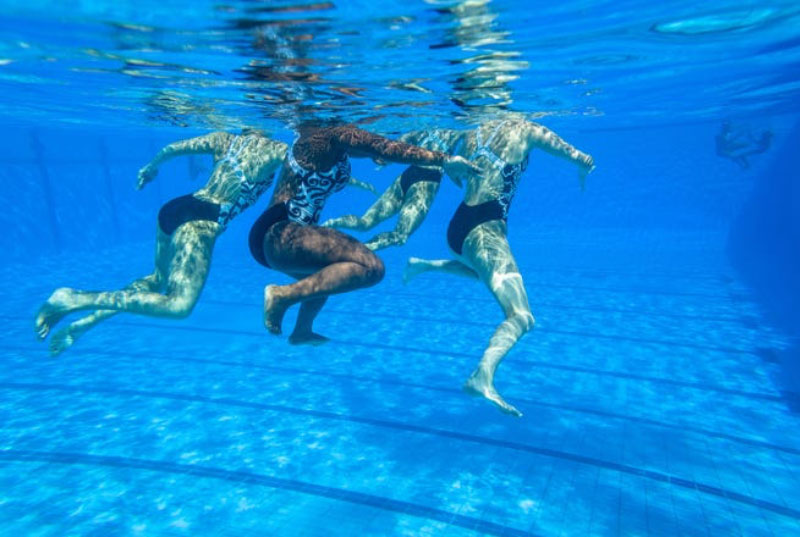
Treading water is the skill that makes deep water non-threatening. Once you can tread water, you can rest anywhere in the pool, recover from a failed stroke attempt, and stay safe in any situation. It's easier than most people expect — and it's worth prioritizing.
What You'll Need
- Ability to be comfortable in the water (complete the fear guide first if needed)
- Access to deep water (ideally 6+ feet) with a wall or lane line nearby
- A qualified instructor or lifeguard present
- Goggles
Step-by-Step Guide
Learn the eggbeater kick first
The eggbeater kick is the most efficient way to tread water. Sit on the pool edge with your legs in the water. Alternate rotating each leg in a circular motion — one leg clockwise, one counterclockwise. They alternate, never moving together.
Tip: Think of your legs as two eggbeaters working in opposite directions. The motion comes from your hips and knees, not your ankles.
Practice in shallow water first
In chest-deep water, try the eggbeater kick while holding the wall. Focus on the leg motion only — don't worry about staying up yet. Get the alternating circular motion consistent.
Tip: Your knees should be bent at roughly 90 degrees. If your legs are too straight, the kick won't generate lift.
Add arm sculling
Arm sculling is a figure-8 motion with your hands, palms facing down, at about waist height. Your hands push water outward and inward in a continuous figure-8. This adds stability and some lift.
Tip: Keep your elbows slightly bent and your movements smooth — no splashing. Sculling is about pressure on the water, not speed.
Combine kick and arms in shallow water
Now combine the eggbeater kick with arm sculling while standing in shoulder-deep water. Try to lift yourself slightly — you should feel upward pressure from the kick.
Tip: If you feel yourself sinking, increase the speed of your kick slightly. The kick does most of the work — the arms just help with stability.
Move to deep water with the wall nearby
Move to the deep end with the wall within arm's reach. Begin treading water. If you feel unstable, grab the wall — that's what it's there for. Work on extending the time you can tread before touching the wall.
Tip: Start with 15-second intervals. Rest at the wall, then go again. Build to 30 seconds, then 1 minute, then 2 minutes.
Practice with hands out of the water
Once you can tread comfortably, practice with your hands above the water surface. This forces your kick to do all the work and significantly improves your kick strength and efficiency.
Tip: This is also a great party trick and a useful test of your treading ability. If you can tread with hands up for 30 seconds, you're genuinely proficient.
Common Mistakes (and How to Fix Them)
Using a bicycle kick instead of eggbeater
Bicycle kick (legs moving together up and down) works but is much less efficient. Learn the eggbeater from the start — it's worth the extra effort.
Panicking and thrashing
Thrashing wastes energy and doesn't generate lift. Slow, deliberate movements are more effective. If you panic, grab the wall and reset.
Looking down
Keep your eyes forward or slightly up. Looking down causes your hips to drop.
Your Practice Schedule
Practice treading water for 5 minutes at the end of every pool session. Start with 15-second intervals and build to continuous treading. Target: 2 minutes of continuous treading before moving to the next guide.
Next Guide
Freestyle Stroke Basics